




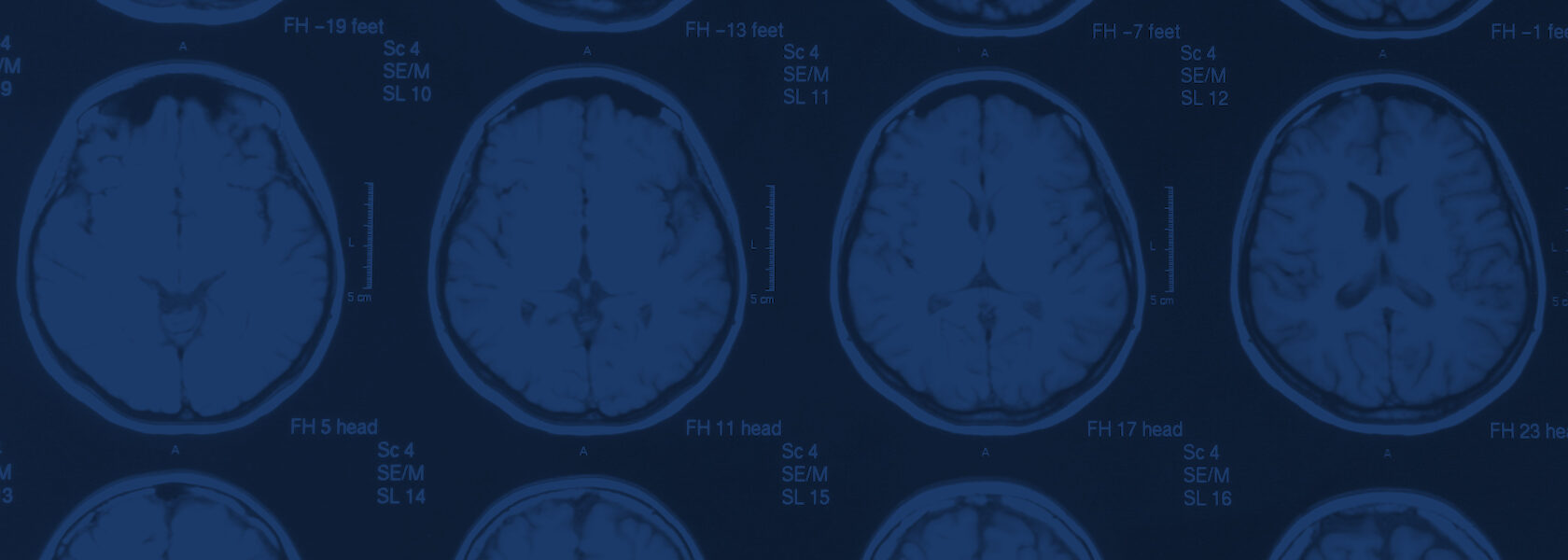
Drawing on data from 152 participants across three international research sites, MOFOMIC integrates structural, functional, and resting-state MRI data to investigate how the human brain processes moral judgment. Each dataset includes high-resolution MRI scans and participants’ evaluations of validated moral foundations vignettes and socio-moral images.
To ensure transparency and replicability, all data have been formatted according to the Brain Imaging Data Structure (BIDS) and are publicly available through OpenNeuro and NeuroVault. Each dataset underwent rigorous manual and automated quality control, making MOFOMIC one of the most comprehensive open-access collections for studying moral judgment and social cognition.

| Dataset | Description | N | Modalities | OpenNeuro | NeuroVault |
|---|---|---|---|---|---|
| NIMF1 — UCSB (MFV) | Task-based fMRI with multiband × 8 | 64 | T1w, T2w, MFV | coming soon | NeuroVault |
| NIMF2 — UCSB (MFV + MAC + SMID + RS) | Expanded design including resting-state | 31 | T1w, T2w, MFV/MAC/SMID, RS | coming soon | NeuroVault |
| NIMF3 — Duke (MFV + RS) | Sequential acquisition (TR = 2 s) | 27 | T1w, MFV, RS | coming soon | NeuroVault |
| NIMF4 — Amsterdam (dMFV + SMID) | Dutch versions of MFV and SMID | 30 | T1w, SMID, dMFV | coming soon | NeuroVault |
Across the four MOFOMIC datasets (NIMF1–NIMF4), participants completed validated paradigms designed to measure moral judgment, social intuition, and resting-state connectivity. Each paradigm was presented within a 3T fMRI environment with standardized task timing, button-based responses, and synchronized physiological recordings.
Text-based moral judgment paradigm adapted from Clifford et al. (2015). Participants read short vignettes depicting moral and social norm violations across five foundation domains and rated how morally wrong each action was (1 = not morally wrong, 4 = extremely morally wrong).
The MFV task was implemented at UCSB, Duke, and Amsterdam (Dutch version = dMFV).
A complementary vignette-based paradigm developed under the Morality-as-Cooperation framework. Participants read short scenarios describing cooperative or non-cooperative behaviors (e.g., helping, reciprocating, deferring) and provided moral evaluations of each act.
The MACV task appears in NIMF2 alongside MFV, SMID, and resting-state data.
Derived from the Socio-Moral Image Database (Crone et al., 2018), this paradigm presents photographic images that vary in valence and foundation category. Participants judge the moral rightness or wrongness of each image, providing a fine-grained measure of intuitive moral sensitivity. SMID is included in NIMF2 and NIMF4 (with dMFV).
Eyes-open fixation for several minutes to measure intrinsic functional connectivity. The resting-state paradigm provides baseline measures for comparing moral task activation and cross-network coherence. Included in NIMF2 and NIMF3.

Because the data are extensive, we recommend downloading selectively using the awscli tool.
The awscli tool can be installed using pip:
pip install awscli.
aws s3 sync --no-sign-request s3://openneuro.org/dsXXXXXX /your/output/dir \ --exclude "*" --include "sub-*/anat/*T1w.nii.gz"
The --exclude "*" part ensures all files are ignored except those matching the--include filter.
aws s3 sync --no-sign-request s3://openneuro.org/dsXXXXXX /your/output/dir \ --exclude "*" --include "derivatives/fmriprep/sub-*/func/*task-mfv*space-MNI*desc-preproc_bold.nii.gz"
aws s3 sync --no-sign-request s3://openneuro.org/dsXXXXXX /your/output/dir \ --exclude "*" --include "participants.tsv"
All MOFOMIC datasets follow the Brain Imaging Data Structure (BIDS) standard. Raw and preprocessed derivatives are included for each participant. Each dataset (NIMF1–NIMF4) is organized into participant-specific folders containing structural, diffusion, and functional data, as well as task event files and metadata.
Example folder hierarchy for a single participant (NIMF3 dataset):
sub-001
├── anat
│ ├── sub-001_T1w.json
│ └── sub-001_T1w.nii.gz
├── func
│ ├── sub-001_task-MFV_bold.json
│ ├── sub-001_task-MFV_bold.nii.gz
│ ├── sub-001_task-MFV_events.tsv
│ └── sub-001_task-MFV_physio.tsv.gz
├── dwi
│ ├── sub-001_dwi.bval
│ ├── sub-001_dwi.bvec
│ └── sub-001_dwi.nii.gz
└── fmap
├── sub-001_dir-AP_epi.nii.gz
└── sub-001_dir-PA_epi.nii.gz
Preprocessed data are located in the derivatives/fmriprep directory, containing anatomical reconstructions, confound regressors, and MNI152NLin2009cAsym-normalized outputs.
derivatives/fmriprep/sub-001
├── anat
│ ├── sub-001_desc-preproc_T1w.nii.gz
│ ├── sub-001_space-MNI152NLin2009cAsym_desc-brain_mask.nii.gz
│ └── sub-001_desc-aseg_dseg.nii.gz
└── func
├── sub-001_task-MFV_space-MNI152NLin2009cAsym_desc-preproc_bold.nii.gz
├── sub-001_task-MFV_desc-confounds_regressors.tsv
└── sub-001_task-MFV_boldref.nii.gz
Each dataset includes a participants.tsv file containing demographic, psychometric, and behavioral variables, as well as accompanying task-* JSON sidecar files that describe acquisition parameters and event timing.
Frederic R. Hopp, Sungbin Youk, Ori Amir, Musa Malik, Kylie Woodman, Brittany Wheeler, Felipe de Brigard, Walter Sinnott-Armstrong, & René Weber (2025). The Moral Foundations MRI Collection: A Multi-Center, Multi-Country Functional MRI Collection for Evaluating Moral Judgment.https://doi.org/XXXXX.
F.R.H. conceptualized the repository, curated all datasets, did visual quality control, preprocessed and analyzed the data, produced the visualizations, uploaded all datasets to OpenNeuro and NeuroVault, wrote the original article draft, and was principal investigator for NIMF4; O.A. collected and curated data for NIMF1, reviewed and edited the original draft; S.Y, M.M., K.W., and B.W. collected and curated data for NIMF2, reviewed and edited the original draft; F.R.H., B.W., R.W. created the MOFOMIC website; F.B, W.S.A. collected and curated data for NIMF3, reviewed and edited the original draft; W.S.A. was principal investigator for NIMF3; R.W. conceptualized the repository, curated datasets and was principal investigator for NIMF1 and NIMF2, supervised the project, reviewed and edited the original draft.


